Ingredients
- 8-12 Thai chillies (bird peppers), each cut into 3-4 segments
- 8 cloves garlic, peeled and cut each into 2-3 pieces
- 2 Tbs. small dried shrimp
- 4 cups julienned peeled unripe papaya - in strips 2-3 inches long and 1/8 inch thick
- 1 cup cut long beans - 1 1/2-inch-long segments
- 1 julienned carrot
- 1/4 cup tamarind juice the thickness of fruit concentrate
- Juice of 2-3 limes, to taste
- 2-3 Tbs. fish sauce, to taste
- 2-3 Tbs. palm sugar, melted with 1 Tbs. water into a thick syrup - use as needed
- 2 small tomatoes, cut into bite-size wedges; or 12 cherry tomatoes, halved
- 1/4 cup chopped unsalted roasted peanuts
 Prepare the ingredients as indicated. Make tamarind juice by starting with 1 Tbs. of compressed tamarind in 1/3 cup of warm water. Work the tamarind with your fingers to dissolve the soft fruit; gather up remaining undissolvable pulp, squeeze to extract juice and discard. Add more tamarind or water as necessary to make 1/4 cup of concentrate.
 Divide the ingredients into two batches and make each batch as follows.
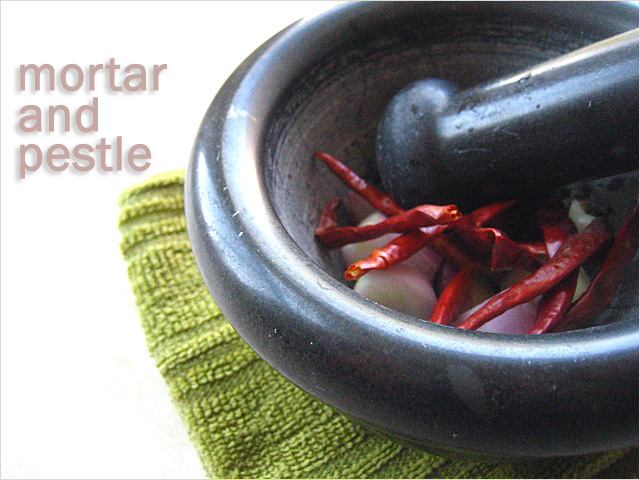
 Using a large clay mortar with a wooden pestle, pound the garlic and chillies to a paste. Add the dried shrimp and long beans and pound to bruise. Follow with the green papaya and carrot. Stir well with a spoon and pound to bruise the vegetables so that they absorb the heat and flavor of the chillies and garlic.
Using a large clay mortar with a wooden pestle, pound the garlic and chillies to a paste. Add the dried shrimp and long beans and pound to bruise. Follow with the green papaya and carrot. Stir well with a spoon and pound to bruise the vegetables so that they absorb the heat and flavor of the chillies and garlic. Add the tamarind and lime juice, fish sauce and palm sugar. Stir and pound a bit more to blend the vegetables with the flavorings and seasonings. Taste and adjust flavors to the desired hot-sour-sweet-and-salty combination. Then add the tomato pieces, stir and bruise lightly to blend in with the rest of the salad. Transfer to a serving plate and sprinkle with peanuts. Serves 6-8.
Notes and Pointers:
Green papaya has a very mild, almost bland, taste, but it is the medium through which robust flavor ingredients take body and form. It picks up the hot, sour, sweet and salty flavors, giving them a unique crisp and chewy texture unlike that of any other vegetable. When made into salad, you wouldn't know that it was mild and timid; you remember it only as bold and spicy.
Unripe papayas are readily available in various sizes and shapes during the summer at many Asian markets. Select one that is very firm with shiny green peel suggesting that it is as freshly picked as possible. Any very firm unripe green papaya can be used for the recipe, ranging from the small Hawaiian papaya to the huge Mexican variety. The important thing is that it should be unripe - the flesh still light green, almost white, in color after it is peeled. Select the firmest one you can find. Even green fruits will eventually ripen and turn soft if allowed to sit around for some time.
There are many ways to make green papaya salads, with varying degrees of hotness, sourness and sweetness. The hottest salads are probably made in northeastern Thailand and Laos where they are eaten with barbecued chicken and sticky rice as a staple food of the populace. There, the salads are made by bruising julienned green papaya with garlic and very hot bird peppers in a large clay mortar with a wooden pestle, then seasoning with lime juice, fish sauce and other flavorings.